-
A papnő / The Priestess
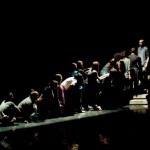
© Máté Tóth Ridovics
by Árpád Schilling
World premiere
Krétakőr, Budapest / HungaryA coproduction with the Osonó Theater / Fazakas Mihály, Romania
Director Árpád Schilling Producer Márton Gulyás Tour Manager & Assistant director Bálint Juhász Video Péter Fancsikai, Máté Tóth Ridovics, Krisztián Pamuki, Zoltán Belényesi InterpretatioN Beata Nagy Titles Anna Lengyel Cast Lóránd Bartha, Kálmán Bíró, Lilla Sárosdi, Sándor Terhes School students Márta Bajka, Levente Sándor Bartha, Annamária Daró, Jolán Dobondi, Kikerics Kata Imre-Muntean, Eszter Incze, Attila Komán, Janka Korodi, Erika Lukács, Ágnes Márton, Tímea Mónika Tankó
DI. 23.04.13 – 19:00 Uhr
MI. 24.04.13 – 12:00 UhrDeutsche Oper Berlin ° Tischlerei
90 minutes ° followed by an audience discussion
Age: 15 upwards
in Hungarian with German surtitlesSYNOPSIS
Lilla Gát, once a celebrated actress in Budapest, moves to the country with her son. Her mission is to create theatre with local children and young people. With her unconventional theatrical and educational approaches she tries to encourage the school students to talk about themselves and their lives. Lilla’s methods are a thorn in the eye to her colleagues who regard lessons on an equal footing as being completely wrong. Although they suffer under the monotony of life in a village they are completely opposed to any change. Lilla is robbed of all her illusions and forced to admit defeat.
The production has been developed with with 15-17 year old students living in the countryside of Transylvania. The result is an unusual mixture of acting, educational theatre and film which blurs the borders between reality and fiction.
Krétakőr (lit: Chalk Circle) is a centre for contemporary arts. It mainly concentrates on examining social processes and problems through play, always against the background of fresh knowledge thrown up by social research. A main aim is to encourage citizens to articulate their concerns about society. Krétakőr regards the experience of creative activity in the community as the sole basis for education and socialisation.

© Máté Tóth Ridovics
Supported by: Trafó – House of Contemporary Arts, Hungarian National Cultural Fund (NKA), Bethlen Gábor Alap, Human Ressources Ministry of Hungary (EMMI), Consulate General of Hungary, Miercurea Ciuc
FESTIVAL Calendar

Kartenvorverkauf
Ticket sales start at
18th February 2013
Booking:
THEATER AN DER PARKAUE
Parkaue 29
10367 Berlin-Lichtenberg
Mo.-Fr. 10:00 bis 17:00 Uhr
Telefone:
+49 (0) 30 557752-51,-52,-53
Fax:
+49 (0) 30 55 33 495
Email:
Besucherservice@parkaue.de
Ticketshop:
Archive 2013: ticket sales have ended.
Ticketing
Expert Guests
Email:
Augenblickmal@parkaue.de
Telefone: