Curators


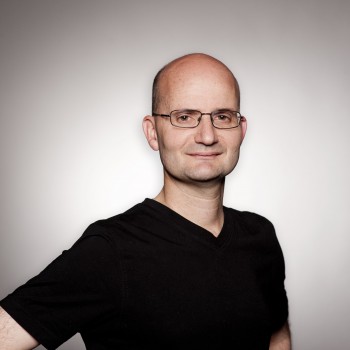
Steffen Georgi was born in Markranstädt near Leipzig. After finishing secondary school, he completed an apprenticeship in carpentry and then pursued a variety of jobs before he began working as a library assistant at Deutsche Bücherei (today Deutsche Nationalbibliothek, or the German National Library). Steffen Georgi has worked as a freelance writer and critic in the fields of theater, dance, film and literature since 2001. He writes for a variety of publications, including Theater der Zeit and Leipziger Volkszeitung and is also a member of the jury for the Leipziger Bewegungskunstpreis.

A production that takes the risk of having its own unique signature captures my interest, no matter how spidery the writing of that signature may be. Also important to me are a differentiated point of view, a certain amount of artistic autonomy and works that allow experiences instead of rehashing opinions.
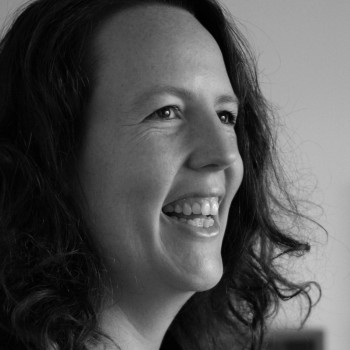
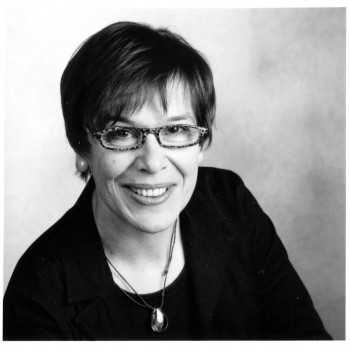
Mijke Harmsen was born in Renkum in the Netherlands. She worked at HAU Hebbel am Ufer in Berlin for seven years and is currently employed as a dramaturg at tanzhaus nrw in Düsseldorf, where she curates guest performances and festivals while providing dramaturgical support for productions made for and with children and young people. In addition, she develops a variety of cultural education formats that allow encounters with new aesthetic forms. Her goal is to bring experimental artistic approaches to an audience of all ages that may not have much experience with theater.

For me, productions are artistically outstanding when they challenge me and the young audience both with a societal position as well as with an aesthetic decision. I kept a very close eye on contemporary dance and critically examined how target groups are dealt with. What I found most important were our discussions about enduring ambivalence in the artistic realization of societal complexity.

Anke Meyer studied literature before making a series of her own theater productions and worked for many years at Deutsches Forum für Figurentheater und Puppenspielkunst (the German Forum for Puppet Theater and Puppetry). Today she works as a freelance writer, dramaturg and curator in Bochum and other places as well as an instructor in the puppet theater program at the State University of Music and Performing Arts Stuttgart. She has been part of the editorial team for double, a magazine dedicated to puppetry, puppet theater and object theater since its founding.

My perception of children's and youth theater is not limited to a theater of objects. Regardless of the genre, I am interested in productions that deal with relevant topics which are playfully explored in a convincing aesthetic – as long as the young audience is left space for their own interpretation and, in participatory projects, space for their own action and decision making.

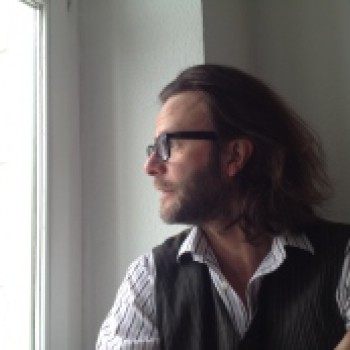
Christian Schönfelder began his professional career as a sports editor in Harz. After completing his civil service and a dramaturgy program at Spielstatt / adk Ulm, he worked at zwinger3 Heidelberg, Schnawwl Mannheim and Schauspiel des Nationaltheaters Mannheim. He has been a dramaturg for 11 years at Junges Ensemble Stuttgart (JES) and, together with Brigitte Dethier, is the artistic director of the international festival Schöne Aussicht. He also occasionally writes and develops plays, often (but not always) in conjunction with JES.

I kept the old Danish criteria for quality in children’s and youth theater in mind: necessity (of a production), intensity (of the performance) and ability (of the artists). When these criteria are met and mesh with each other, that already speaks a great deal for an “artistically outstanding production”. I was pleased to see artists who met their young audience with openness and curiosity, who challenged and moved them and at least did not hide all of the diversity, complexity and contradictions of our era.

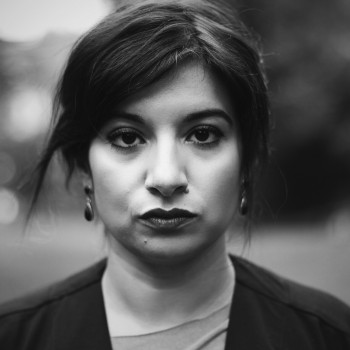
Dr. Azadeh Sharifi is a cultural studies and theater scholar, writer and activist. She has been working on her qualification as a university lecturer since October 2016 at the Ludwig Maximilian University of Munich on the topic of “(Post)migrant Theater in German Theater History – (Dis)continuities of Aesthetics and Narratives”. Prior to this, she was a fellow at the International Research College Interweaving Performance Cultures at Freie Universität Berlin. She participated as a writer in the Balzan-Preis project “The Role of Independent Theater in Contemporary European Theater: Structural and Aesthetic Changes" by Professor Manfred Brauneck and the German International Theater Institute.

For me, artistically outstanding productions mean that they touch the audience emotionally as well as intellectually. I was interested in productions that illustrate the diversity of German society and, in doing so, pursue a respectful examination of this.

Termine


Tuesday 25th

Wednesday 26th

Thursday 27th

Friday 28th

Saturday 29th

Sunday 30th